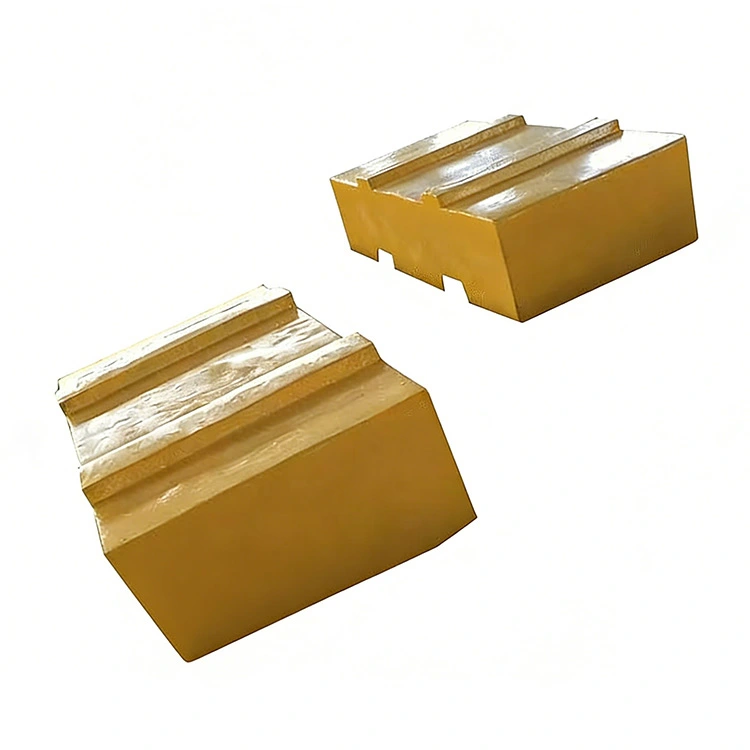
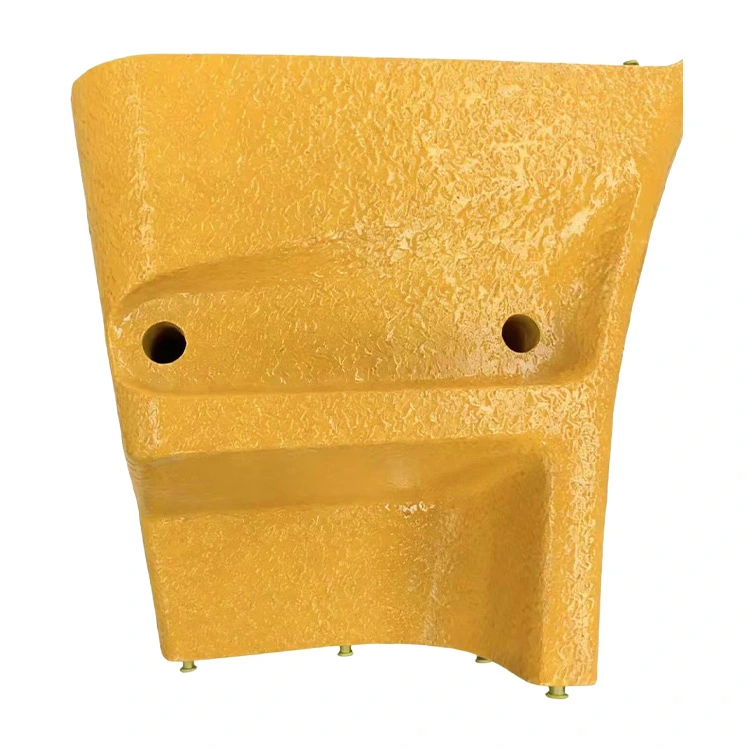
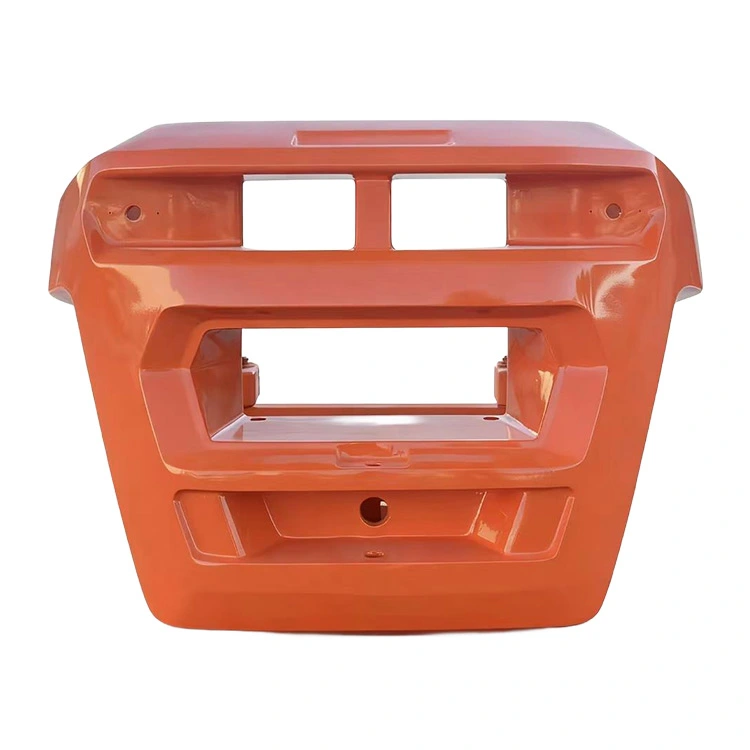
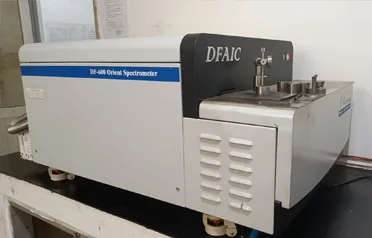
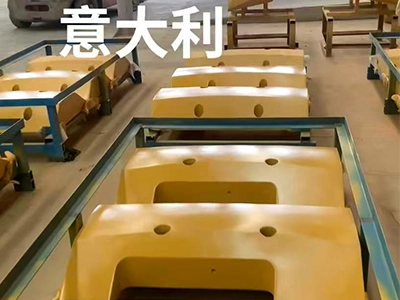
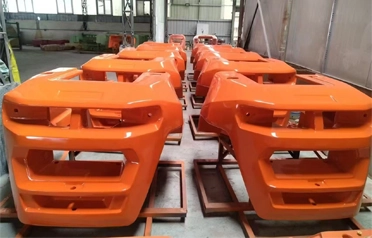
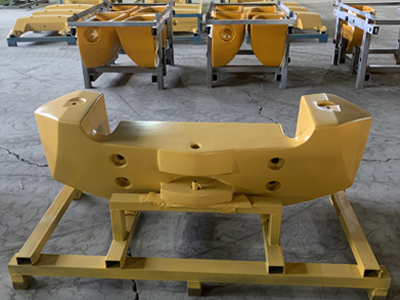
In the construction machinery counterweight production industry, there are many casting processes, with significant differences in quality and cost. Why has V-process vacuum casting stood out and become the mainstream preferred solution for high-end counterweight production? Zunhua Shengjian Fanrong Machinery Parts Co., Ltd. has deeply cultivated the V-process vacuum casting process, relying on advanced negative pressure dry sand molding technology to completely overcome many shortcomings of traditional casting processes. This allows them to reliably produce high-quality counterweight products for construction machinery such as forklifts, excavators, cranes, elevators, and wind power equipment, characterized by uniform density, precise dimensions, smooth surfaces, high cost-effectiveness, and environmental friendliness, demonstrating outstanding comprehensive production advantages.
I. Uniform Density and Precise Weight, Meeting Core Counterweight Requirements
Uniform weight and precise values are core performance requirements for counterweight components. V-process vacuum casting, relying on the principle of negative pressure compaction combined with high-rigidity dry sand molding, produces counterweight iron with a weight density error controlled within ≤±0.5%, far exceeding the precision of traditional sand casting. The entire molding process is stable and controllable, with no shrinkage cavities, porosity, or other defects inside the casting. The texture is dense and uniform, resulting in extremely strong counterweight stability. The overall weight deviation of the product is minimal, eliminating the need for secondary counterweight calibration, and fully meeting the usage standards of high-precision assembly scenarios such as high-end forklifts and AGV intelligent equipment.
II. High Dimensional Accuracy and Smooth Surface, Reducing Machining Waste
V-process vacuum casting utilizes a plastic film coating molding process, resulting in a smooth and flat casting surface with a surface roughness of Ra≤12.5μm, approaching the quality standards of precision casting. Product dimensional accuracy reaches CT8–CT9 level, with draft angles of only 0°–1°, and clear overall contours with high regularity. Compared to traditional processes, this process reduces sand removal and grinding workload by more than 60%, allowing most products to achieve minimal or even no machining, directly completing painting and assembly processes. It also effectively eliminates common casting defects such as misalignment, seams, and sand adhesion, resulting in a clean and refined product appearance that fully meets the stringent quality requirements of high-end customers and export products.
III. High Yield and Significantly Reduced Production Costs
This process employs a binder-free dry sand production model, achieving a used sand recycling rate of ≥95% and extremely low waste sand emissions, significantly reducing raw material procurement and processing costs. Leveraging the characteristics of negative pressure filling and strong feeding, the required riser volume is smaller, increasing cast iron material utilization by 25% compared to traditional processes. The overall finished product qualification rate can reach over 99%, with fewer casting defects and a low scrap rate. It is stably adaptable to the batch production of various large, medium, and small counterweight irons ranging from 10 to 1600 kg, resulting in significant cost reduction through large-scale production.
IV. Environmental Protection, Energy Conservation, and Consumption Reduction: Creating a Green Foundry Production Model
The V-process vacuum casting production process requires no binders or coal powder, eliminates the need for mold drying, and generates virtually no harmful gases. The production workshop experiences less dust and lower equipment noise, achieving a dust-free and clean production environment that significantly improves the working conditions for frontline workers. Simultaneously, the process boasts significant energy efficiency advantages, with equipment power consumption only 60% of that of traditional wet sand casting, effectively saving on water, electricity, coal, and other energy sources. Furthermore, this process reduces labor input by 35%, with a simple and efficient sand removal process that greatly reduces worker fatigue and labor costs.
V. Longer Mold Life, Suitable for Large-Scale Mass Production
The dry sand used in production is free of chemical components and corrosive, resulting in a mold lifespan 2-3 times longer than that of resin sand processes. This effectively reduces mold replacement frequency and equipment maintenance costs. Combined with a high-rigidity, non-deformable specialized sand box, mass-produced products exhibit strong consistency and stable quality, enabling continuous fulfillment of large-tonnage, high-volume engineering machinery counterweight orders. This is currently the mainstream and mature process for heavy-duty counterweight production of forklifts and engineering machinery equipment.
VI. Comparison of Core Parameters between V-process and Traditional Processes
To visually demonstrate the comprehensive advantages of V-process vacuum casting, a comparison of its core parameters with traditional clay sand and resin sand casting processes is presented: In terms of dimensional accuracy, the V-process can achieve CT8–CT9 grade, while the traditional process only achieves CT12–CT14 grade; in terms of surface quality, V-process castings have high smoothness and require less grinding, while traditional castings have rough surfaces and require cumbersome grinding processes; in terms of density uniformity, the V-process error is controlled within ±0.5%, while the traditional process error is as high as ±2%–±3%; in terms of sand recycling rate, the V-process is ≥95%, while the traditional process is only 60%–80%; in terms of environmental performance, the V-process is green and has low emissions, while the traditional process has significant dust and exhaust gas pollution problems.
VII. Typical Application Scenarios
The counterweight products produced by this process are suitable for heavy machinery and equipment in multiple fields. Core application scenarios include 1-5 ton forklift counterweights, excavator rear counterweights, crane counterweights, elevator counterweights, wind power equipment counterweights, and other industrial counterweight components. They are widely applicable and have strong market versatility.
Considering the comprehensive advantages in precision quality, processing efficiency, production cost, environmental standards, and batch production capacity, the answer is clear: V-process vacuum casting, with its stable density precision, excellent surface quality, ultra-high material utilization rate, green and energy-saving production method, and long-term stable mold performance, completely solves the various pain points of traditional casting processes, making it the optimal process choice for high-quality, large-scale, and green production of counterweight iron for engineering machinery.
We use cookies to offer you a better browsing experience, analyze site traffic and personalize content. By using this site, you agree to our use of cookies.Privacy Policy